Baie-Comeau · Eudist heritage
The frescoes
of Sainte-Amélie
Follow the scenes painted by Guido Nincheri, from Saint John Eudes and Saint Amélie to the Nativity and Resurrection.
Begin the visit ↓Guido Nincheri · 1941–1947
Saint John Eudes: prayer and glory
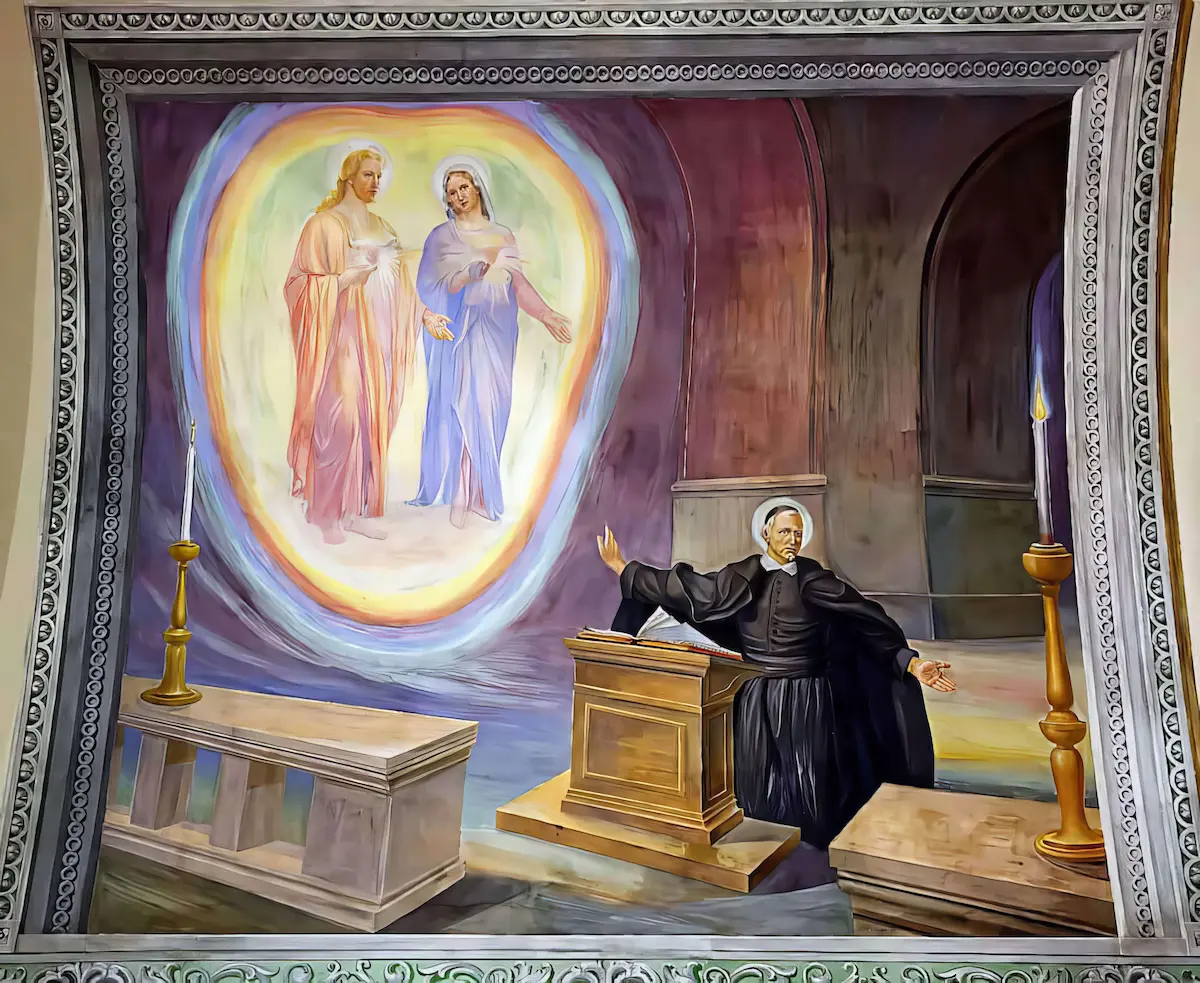
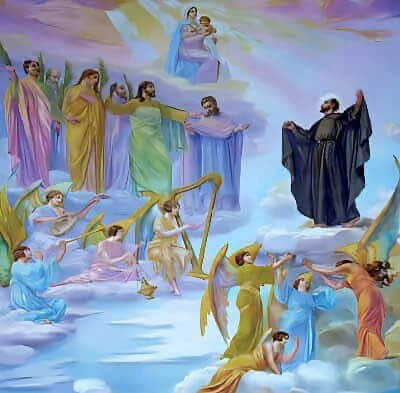
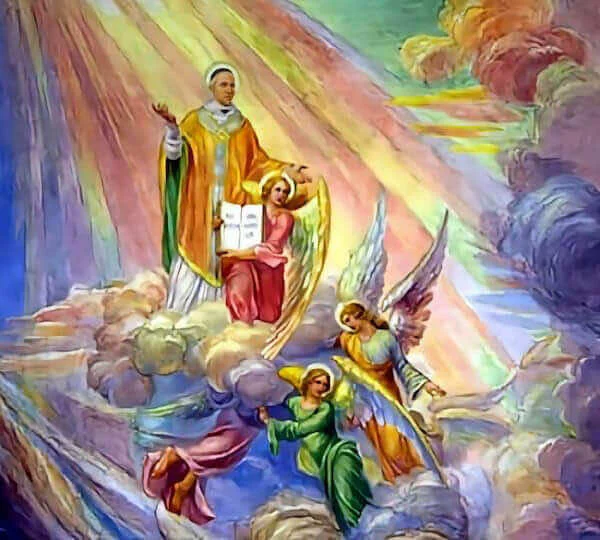
In the choir vault, the founder is shown praying before the Hearts of Jesus and Mary, then surrounded by angels.
Read more · Devotion to the Hearts
The painting shows John Eudes at prayer; an angel carries the motto “To Jesus through Mary.” The next panel depicts him in glory, with a book associated with his writings and devotion to the Hearts of Jesus and Mary.
This is an artistic interpretation of his spirituality, not a documentary depiction of a precisely dated event.
Chandler · Saint-Cœur-de-Marie
The glory of Saint John Eudes · narration by Denise St-Pierre
Listen to the story accompanying the fresco in Chandler.
Hagiographic tradition
Episodes from the life of Saint Amélie
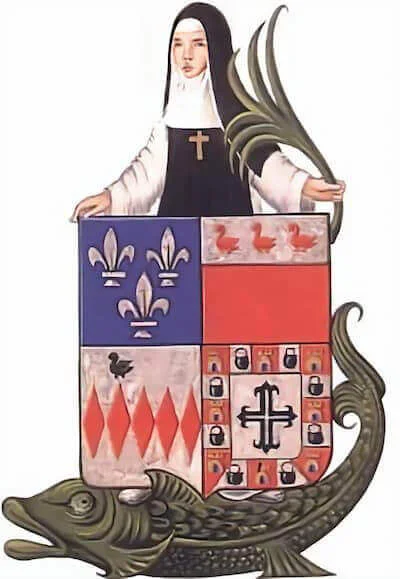
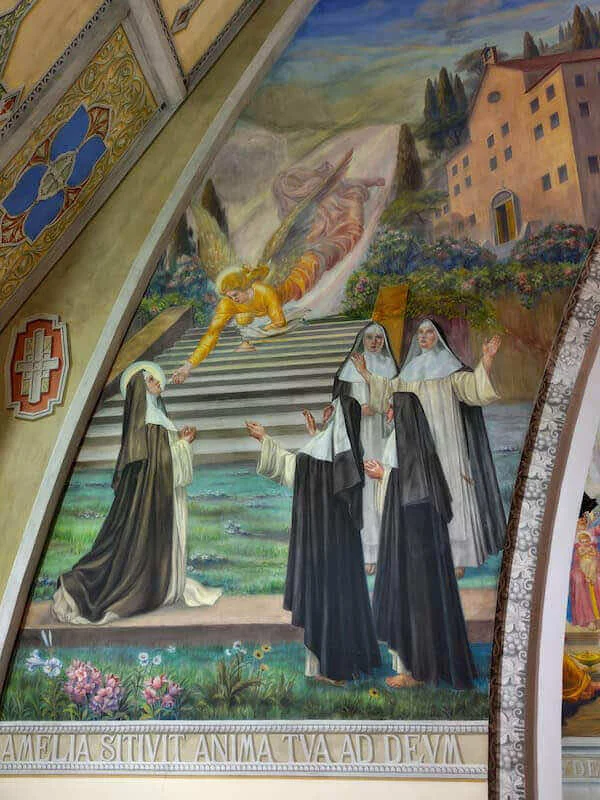
Amalberge of Temse, known as Saint Amélie in tradition, appears in several scenes arranged in narrative order.
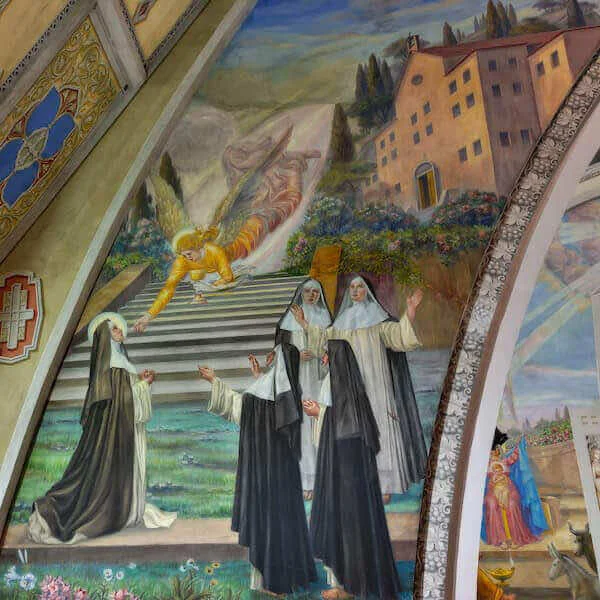
Read more · A life told through images
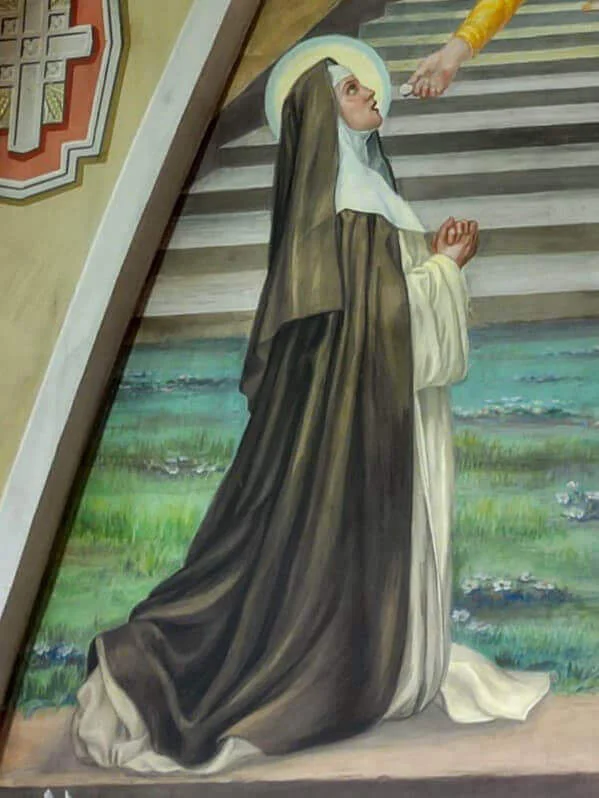
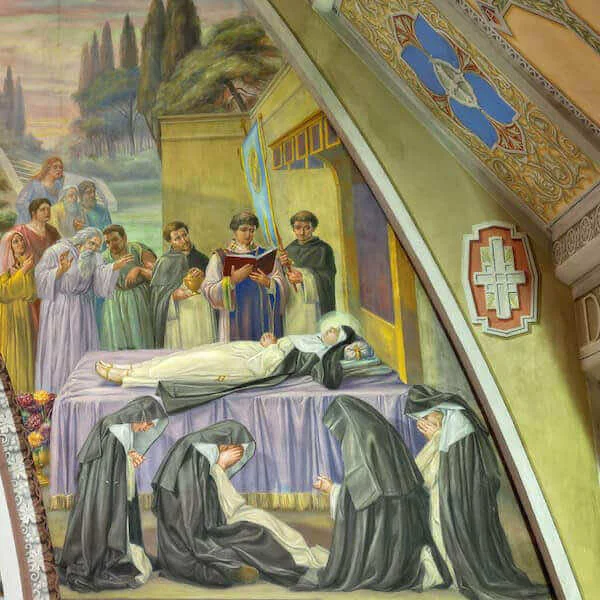
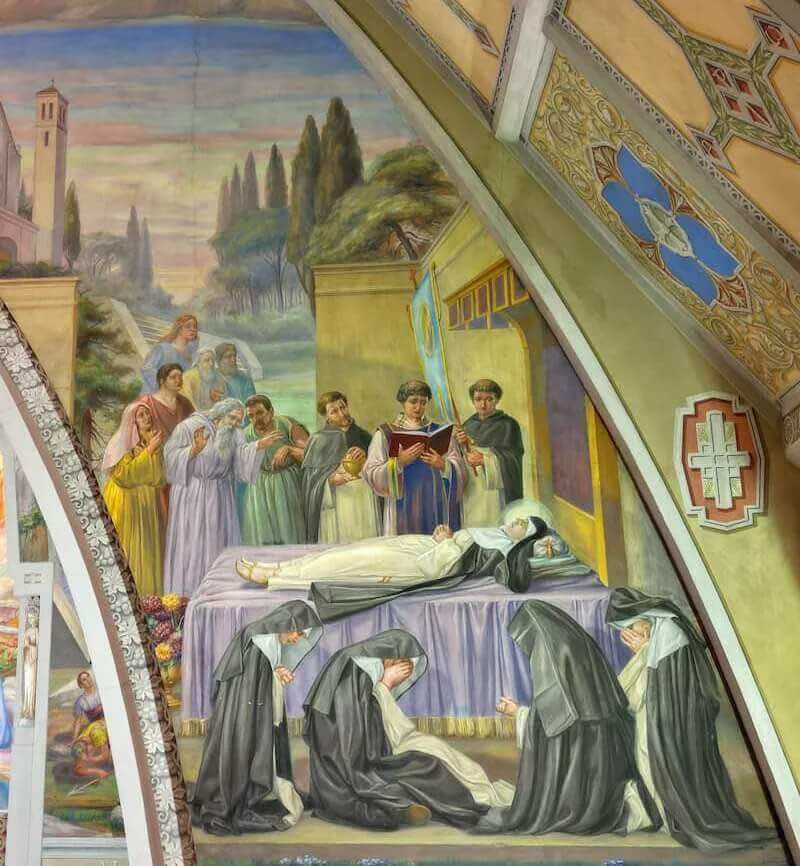
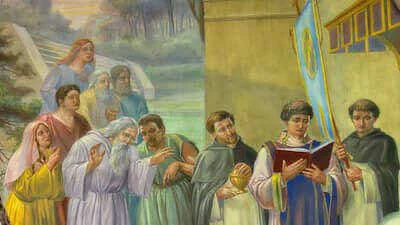
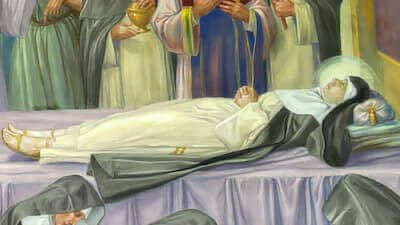
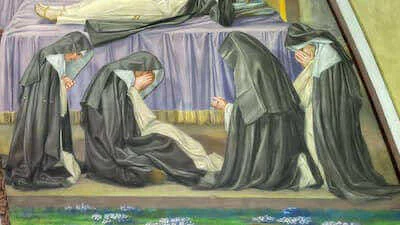
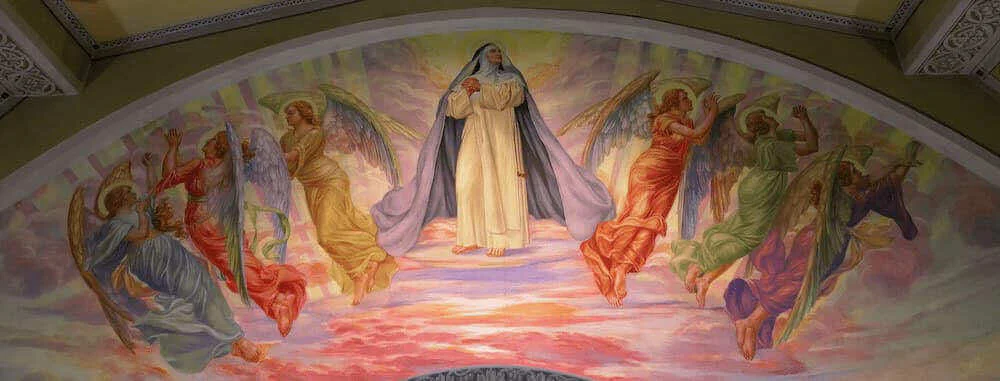
Tradition recounts that Amalberge chose religious life. The paintings evoke a miracle involving a sturgeon, Communion brought by an angel, and then the saint’s funeral and glory. These legendary episodes are presented as such.
The funeral · views and details
Mary, the Child, and the angels
Mater Christi
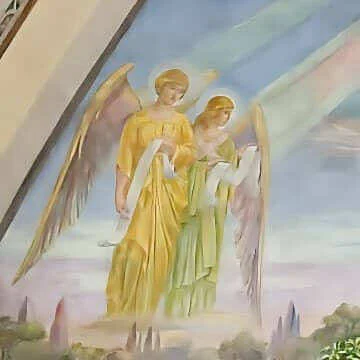
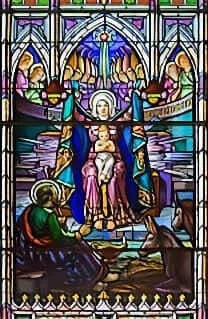
The panel brings together the Virgin and Child, musical angels, and a landscape dotted with historical references.
Read more · References in the panel
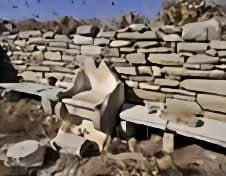
Documentation compares some elements of the fresco with a Litany of the Virgin stained-glass window in Trois-Rivières and the Seat of Moses associated with the synagogue at Delos. The angels hold a musical scroll above Mary and the Child.
The Christian story · Guido Nincheri
Resurrection and Nativity
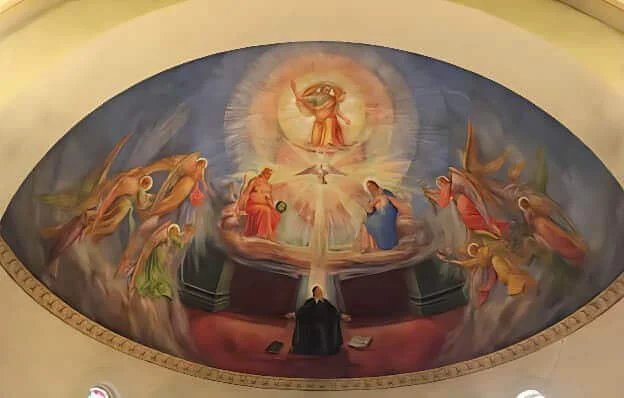
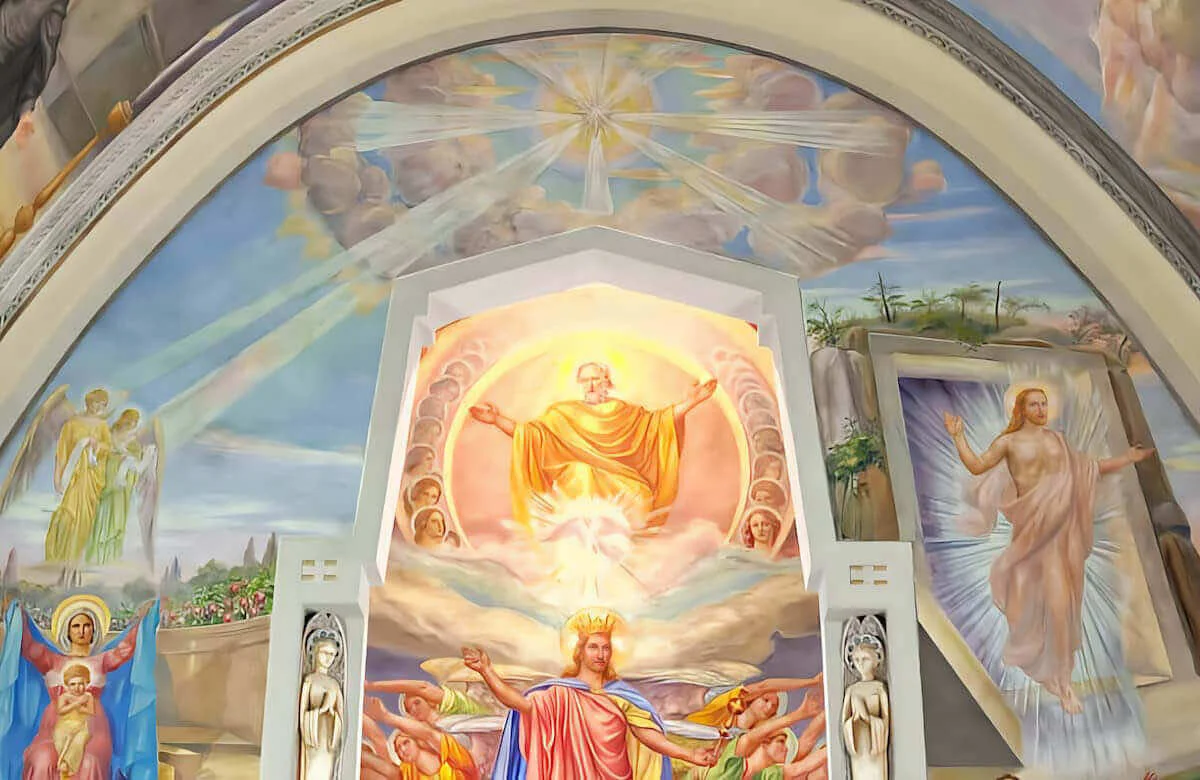
The vault brings together these two scenes on either side of the central light of the Trinity.
Two scenes in one ensemble
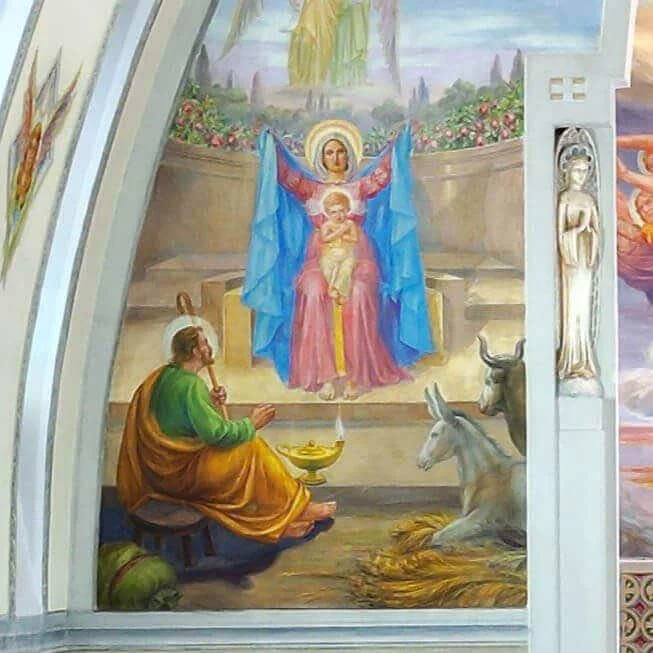
The Nativity and Resurrection panels echo one another beneath the vault.
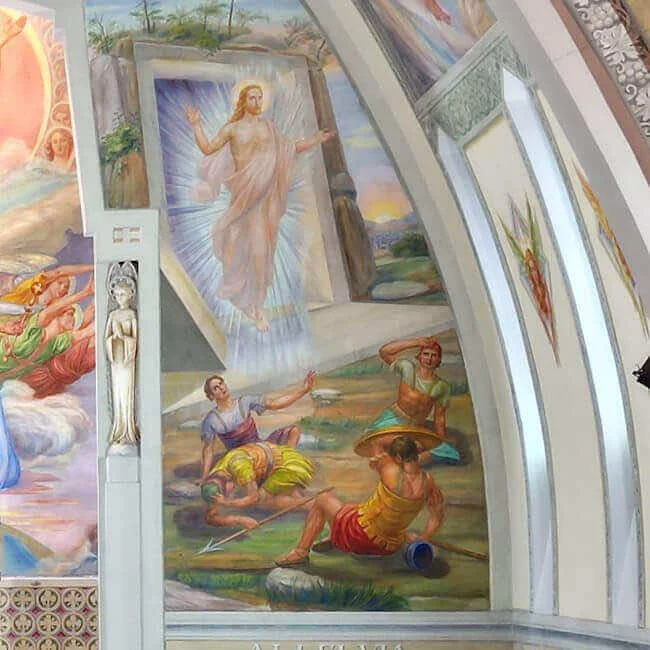
The model and preparatory drawing
The soldier identified as Guido Nincheri and the dotted outline of the drawing are shown side by side.
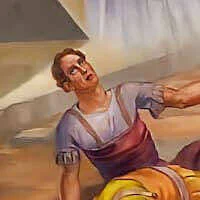
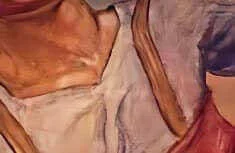
Read more · Transferring the drawing
The visible dots mark the transfer of the preparatory drawing onto the plaster. The artist pricked the cartoon, then transferred the lines with powder onto fresh intonaco. A fresco is painted in daily sections, called giornate, which join to form a continuous surface.